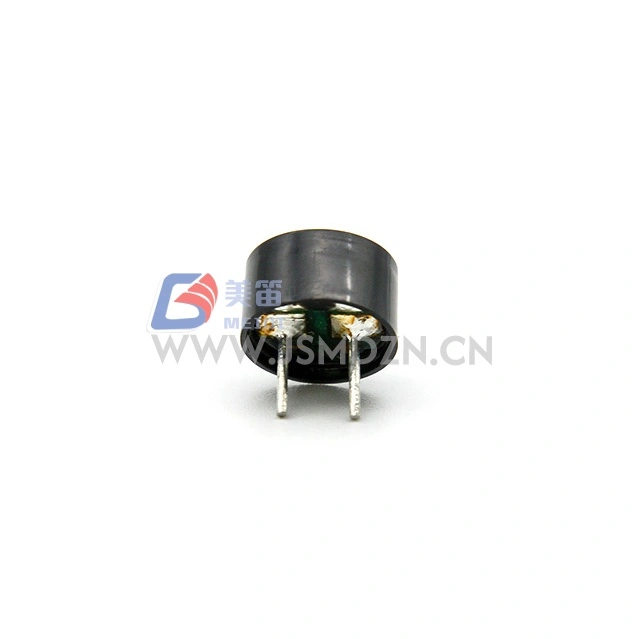
A piezoelectric buzzer turns a tiny electric signal into a crisp, reliable tone by exploiting the piezoelectric effect. This guide explains how a piezoelectric buzzer works, how its specifications map to real-world performance, and what to verify before you specify one for a new design. Whether you are replacing an older electromagnetic part or building a compact alarm from scratch, the basics below apply directly to component selection.
1. What a Piezoelectric Buzzer Actually Is
A piezoelectric buzzer is a sound-generating component built around a piezoelectric ceramic element. When a voltage is applied across the ceramic, the material changes shape by a microscopic amount. Driven at the right frequency, that repeated flexing pushes air and produces an audible tone. Unlike a speaker, a piezoelectric buzzer does not need a moving coil or a permanent magnet to operate, which is the main reason it stays small, thin, and power-efficient.
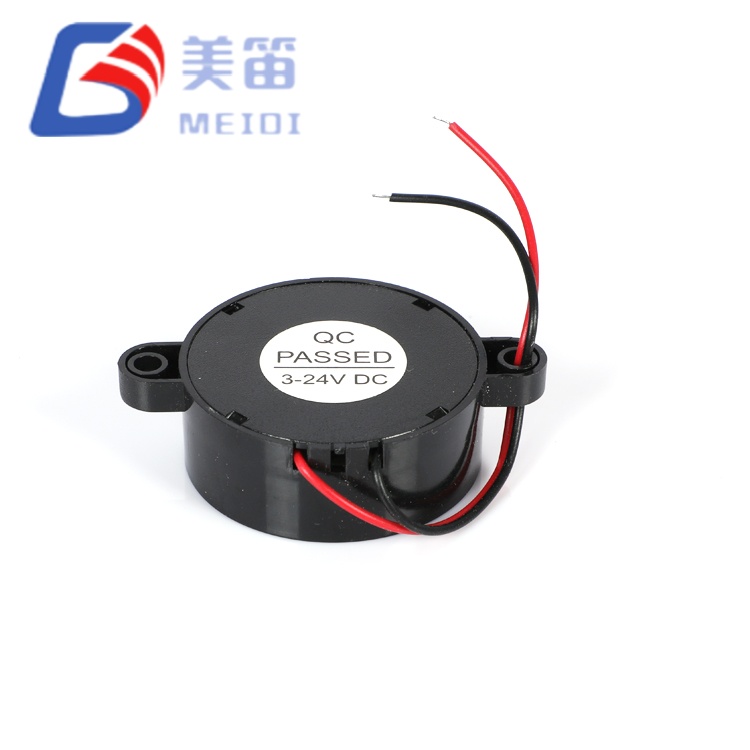
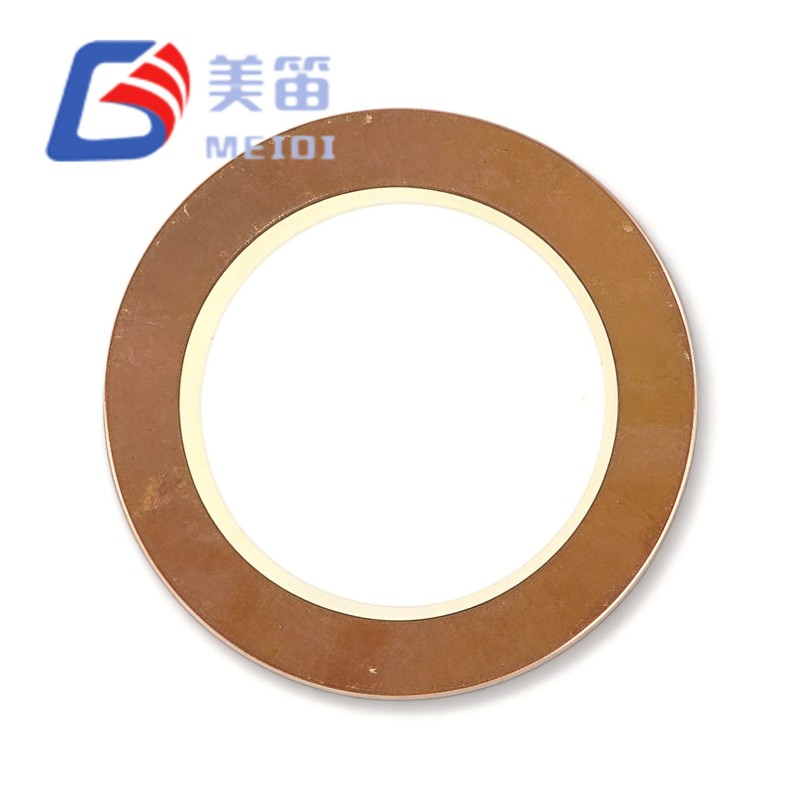
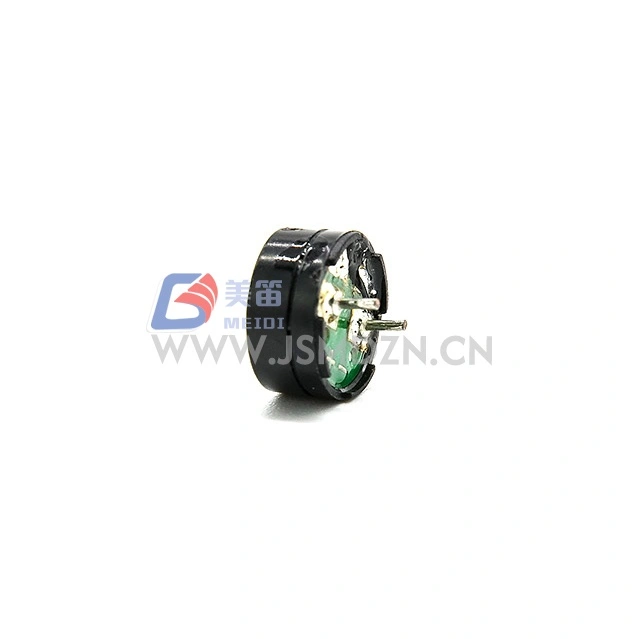
The simplest form is a bare piezoelectric disc, often called a buzzer element, that you drive with an external oscillator circuit. The more common form for product designers is a packaged piezoelectric buzzer that already includes the ceramic, a diaphragm, and in many cases the drive electronics, all inside a sealed housing. Understanding this split is the first step in any piezoelectric buzzer selection project.
2. How a Piezoelectric Buzzer Works
The working principle of a piezoelectric buzzer comes down to one physical property and a small amount of supporting circuitry.
2.1 The Piezoelectric Effect
Certain ceramic crystals develop an internal electric charge when mechanically stressed, and they deform when an electric field is applied. A piezoelectric buzzer uses the second half of that relationship: an alternating voltage makes the ceramic stretch and contract thousands of times per second. The ceramic is bonded to a thin metal diaphragm, so the diaphragm vibrates with it and radiates sound.
Because the motion is only a few microns, the moving mass inside a piezoelectric buzzer is tiny, which keeps the whole piezoelectric buzzer light and fast to respond. That is why a piezo part can switch on almost instantly and draw very little current compared with a coil-based device of similar size.
2.2 Passive vs. Active Internal Circuit
There are two practical families of piezoelectric buzzer, and the difference matters for your bill of materials:
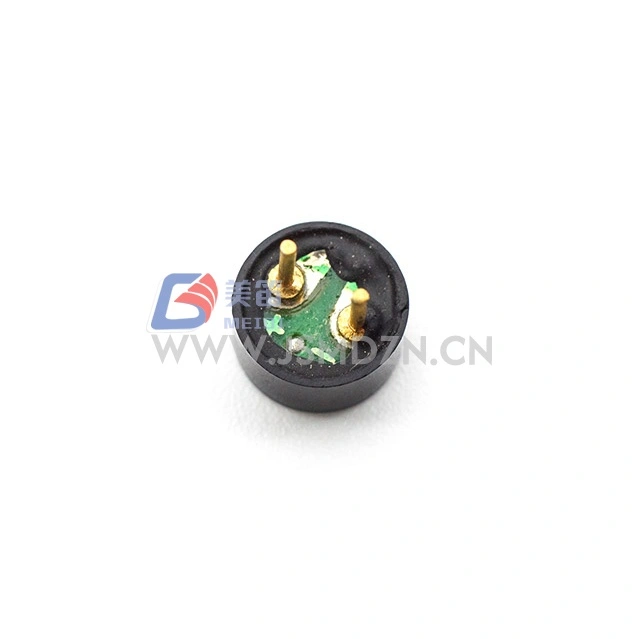
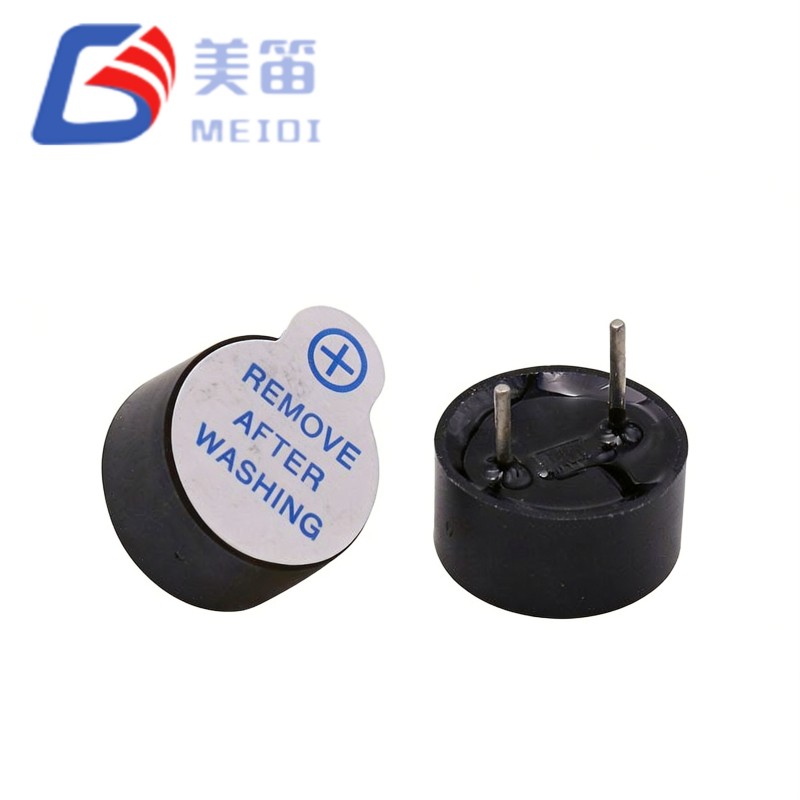
Passive piezoelectric buzzer (sometimes called a piezo element or external-drive part): it contains no oscillator. You must supply a square-wave signal at the desired frequency. This gives you full control over pitch and lets one piezoelectric buzzer play several tones.
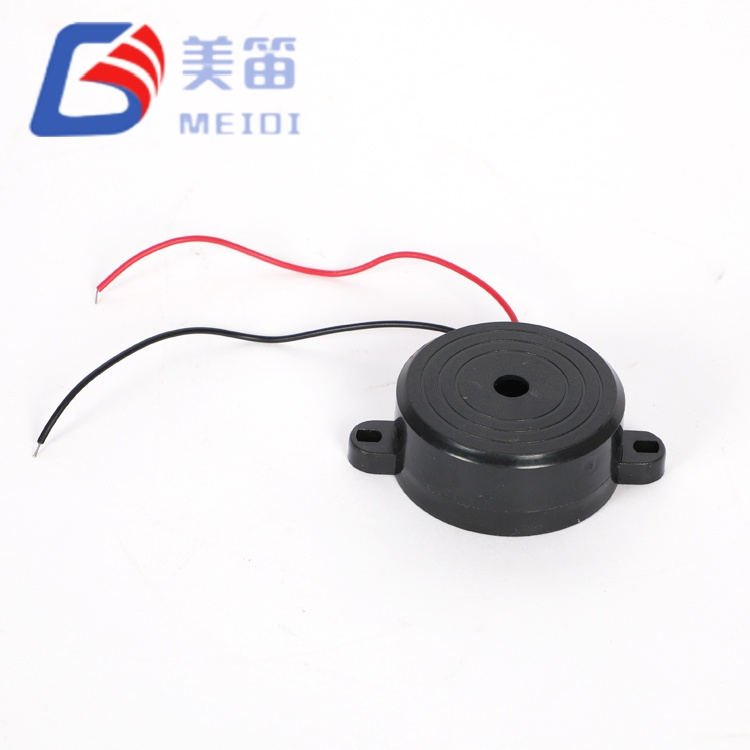
Active piezoelectric buzzer (internal-drive): it has a built-in oscillator and drive circuit. Apply the rated DC voltage and a piezoelectric buzzer of this type emits a fixed tone on its own. This is the easier option when you only need a single alert sound.
For either type, the resonant frequency of the ceramic sets the natural, loudest operating point. Driving a piezoelectric buzzer near that frequency gives you the best sound pressure level for the least power drawn from the supply. For any piezoelectric buzzer, staying at resonance is the single biggest lever on loudness.
2.3 Key Performance Parameters
Four numbers describe almost every piezoelectric buzzer you will evaluate, and together they predict how a piezoelectric buzzer will perform in your product:
Rated voltage — the supply the part is designed for, commonly 3 V, 5 V, or 12 V DC.
Resonant frequency — the frequency at which output is strongest, usually 2–5 kHz for small parts.
Sound pressure level (SPL) — loudness at a fixed distance, measured in decibels.
Current consumption — typically a few milliamps, far below an electromagnetic equivalent.
A piezoelectric buzzer that looks identical to another on the outside can behave very differently once these four values are compared, so always read them together rather than in isolation.
3. Piezoelectric vs. Electromagnetic Buzzer
Designers often choose between a piezoelectric buzzer and an electromagnetic (coil) buzzer, and the trade-offs decide which piezoelectric buzzer fits a given product. They are not interchangeable, so the table below is worth keeping open during selection.
Aspect
Piezoelectric Buzzer
Electromagnetic Buzzer
Driving principle
Piezoelectric ceramic flexing
Coil + diaphragm (magnetic field)
Typical current draw
Very low (mA range)
Higher
Profile / thickness
Can be very thin (SMD < 2 mm)
Usually taller
Tone control
Full (passive type) or fixed (active)
Limited
Best fit
Battery devices, compact alarms, SMD layouts
Higher bass, some legacy designs
A piezoelectric buzzer is usually the right call when the power budget and board space are tight. If you need a deeper, lower-frequency body to the sound, an electromagnetic part may still win, but for most alert and notification uses the piezo part is the leaner choice.
4. How to Read the Specifications
The numbers on a datasheet only help if you know what they mean in practice for a piezoelectric buzzer.
4.1 Rated Voltage and Tolerance
Match the rated voltage of the piezoelectric buzzer to your supply rail. Many small parts are 3 V or 5 V for consumer electronics; 12 V parts are common in industrial and automotive-adjacent equipment. Keep some headroom and avoid sustained over-voltage, which stresses the ceramic and shortens the life of the piezoelectric buzzer.
4.2 Resonant Frequency and SPL
Sound pressure level is almost always quoted at the resonant frequency. If you drive a piezoelectric buzzer off-resonance, expect the loudness of that piezoelectric buzzer to drop. For an alarm, pick a frequency inside the most sensitive part of human hearing (roughly 2–4 kHz) and confirm the SPL at your actual drive frequency, not just the headline number on the page.
4.3 Operating Temperature and Environmental Compliance
Check the operating temperature range of the piezoelectric buzzer against where the product will live. Outdoor, automotive, and industrial gear need a wider span than office equipment. For markets with substance restrictions, confirm compliance with RoHS and REACH; MEIDI parts are manufactured under ISO 9001 and ISO 14001 quality and environmental management systems.
5. MEIDI Piezoelectric Buzzer Product Range
The table below shows a representative slice of real MEIDI piezo parts across passive, active, and SMD families. Exact values come from the current product catalog and are useful as a starting point when you select a piezoelectric buzzer for a new board. Each piezoelectric buzzer below is a stocked, production part rather than a custom build.
Model
Type
Rated Voltage
Resonant Freq.
SPL
Dimensions (mm)
HNR-1207PA5.0
Passive piezo
5 V DC
4000±500 Hz
≥80 dB
Φ12.5×7.0
HNR-1707
Passive piezo
5 V DC
4000±500 Hz
≥85 dB
Φ17×7.5
HNR-2207
Passive piezo
12 V DC
2000±500 Hz
≥85 dB
Φ22×7
HNR-2310A
Passive piezo
12 V DC
3500±500 Hz
≥85 dB
Φ23×9.8
HND-1407B
Active piezo
5 V DC
4500±500 Hz
≥85 dB
Φ14×7
HND-2316
Active piezo
12 V DC
3000±500 Hz
≥90 dB
Φ23×16
HND-2616
Active piezo
12 V DC
2800±500 Hz
≥85 dB
Φ25.6×16
HND-4216
Active piezo
12 V DC
2800±500 Hz
≥90 dB
Φ41.8×16
MLT-1230
SMD piezo
3 V DC
4000±300 Hz
≥80 dB
12×12×3.0
MLT-1625
SMD piezo
5 V DC
4000±300 Hz
≥75 dB
16×16×2.5
This range covers low-voltage consumer parts, 12 V industrial parts, and thin SMD options for dense PCBs. For bare drive elements, MEIDI also supplies piezoelectric discs such as the FT-27T-4.0B1-C25 resonant at 4.0±0.5 kHz, which pair with a separate drive circuit when a bare piezoelectric buzzer element is the better fit.
6. Selection Basics: Matching a Piezoelectric Buzzer to Your Application
Good selection of a piezoelectric buzzer is mostly a process of narrowing the field against four constraints.
6.1 Space-Constrained and SMD Designs
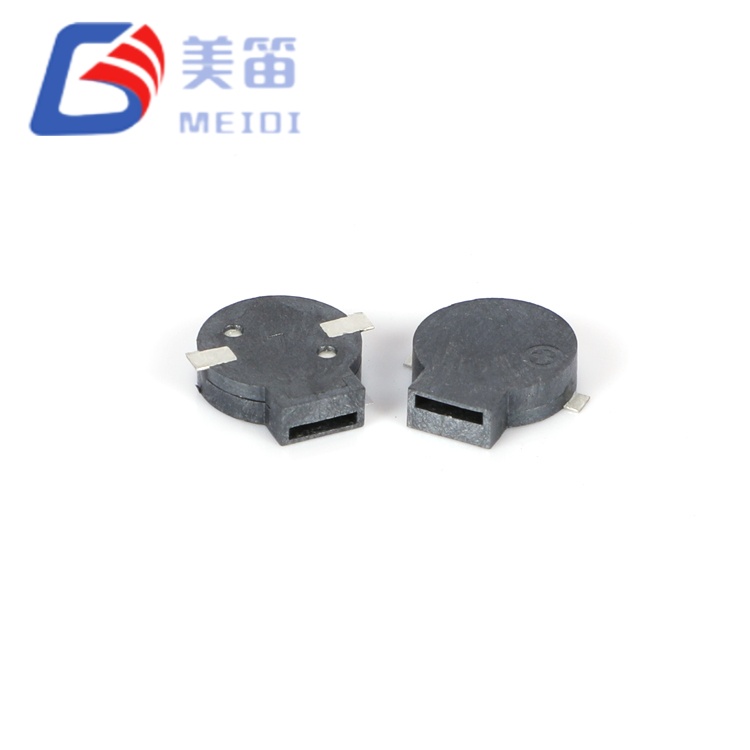
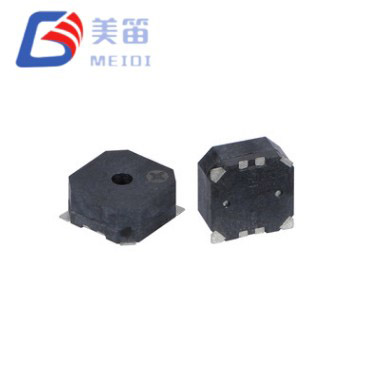
When the board is crowded, an SMD piezoelectric buzzer such as the MLT series keeps the speaker off the height budget, and a thin piezoelectric buzzer like this is often the only option that fits. These parts sit flat on the PCB and survive reflow, which simplifies automated assembly and lowers the chance of a hand-placement error.
6.2 High-SPL Alarm Applications
For loud alerts, look at active 12 V parts with SPL at or above 90 dB, like the HND-2316 or HND-4216. Remember that SPL falls quickly once you move a piezoelectric buzzer away from its resonant frequency, so keep your drive frequency close to the catalog value to protect the loudness you paid for.
6.3 Battery-Powered and Low-Current Devices
A piezoelectric buzzer is the natural choice here. Passive 3–5 V parts draw only a few milliamps, so they barely touch the battery. Pair a passive piezoelectric buzzer with a low-power microcontroller PWM output and you control both tone and duty cycle without a dedicated sound chip.
6.4 Industrial 12 V Systems
Equipment running on 12 V rails should use 12 V-rated parts directly. The HNR-2207, HNR-2310A, and the HND active family are built for that environment and carry the wider operating temperature span many industrial products require. Choosing a 12 V piezoelectric buzzer up front avoids a regulator and its associated losses.
7. Common Mistakes in Piezoelectric Buzzer Selection
Assuming any buzzer fits any voltage. A 5 V part on a 12 V rail will fail early. Match the rated voltage of the piezoelectric buzzer first.
Quoting SPL at the wrong frequency. The loudness number is valid at resonance; off-resonance it drops. Validate the SPL of your piezoelectric buzzer at the frequency you will actually drive.
Ignoring the passive vs. active difference. A passive piezoelectric buzzer needs an external tone source. Wire it to a bare GPIO with no oscillator and you will hear nothing.
Forgetting temperature range. A part rated to +60 °C will not survive a hot enclosure, so check the span of your piezoelectric buzzer before you commit.
8. Why Work With an Experienced Piezoelectric Buzzer Manufacturer
Specifying the right piezoelectric buzzer is only half the job. A manufacturer that stocks a broad piezo family, keeps consistent lead times, and can supply full specifications and compliance documentation shortens your qualification cycle. MEIDI has supplied buzzer components to export customers for 15 years, with production dating back to our 2011 factory, and supports RoHS and REACH compliance with ISO 9001 and ISO 14001 systems in place.
When you send a target SPL, voltage, and space budget, an experienced partner can usually point to two or three catalog parts that already meet the requirement instead of starting a custom project from zero. That is the practical value of choosing a piezoelectric buzzer supplier with depth across passive, active, and SMD lines.
9. Frequently Asked Questions
Can a piezoelectric buzzer play different tones?
Yes, if it is a passive type. A passive piezoelectric buzzer has no internal oscillator, so an external circuit controls the frequency and you can generate multiple tones or a melody. An active type emits one fixed tone when powered.
Why is my piezoelectric buzzer so quiet?
The most common cause is driving it off its resonant frequency, where SPL drops sharply. Confirm the drive frequency matches the resonant frequency in the datasheet, and check that the supply voltage is at the rated value for that piezoelectric buzzer.
Is a piezoelectric buzzer better than an electromagnetic one?
For low power and thin profiles, a piezoelectric buzzer is usually better, and a piezoelectric buzzer also tends to outlast a coil part in humid conditions. An electromagnetic buzzer can give a fuller low-frequency sound but draws more current and sits taller. The right choice depends on your power and space limits.
Do piezoelectric buzzers need a driver circuit?
Active types include the driver and need only DC power. Passive types, including a bare piezoelectric disc, need an external oscillator or a microcontroller PWM output to produce sound.
What voltage should I choose for a piezoelectric buzzer?
Match your system rail. Use 3–5 V parts for battery and consumer devices, and 12 V parts for industrial equipment. Never exceed the rated voltage for sustained operation, as it degrades the ceramic over time.
Are MEIDI piezoelectric buzzers compliant with substance regulations?
MEIDI piezo parts are supplied with RoHS and REACH compliance, manufactured under ISO 9001 and ISO 14001 systems.
10. Conclusion
A piezoelectric buzzer is a deceptively simple part, but the difference between a clean, loud alert and a weak, unreliable one is almost always in the selection detail: voltage match, resonant-frequency alignment, and the right package for your board. Start from the application constraints, use the parameter tables above as a checklist, and confirm compliance documents before you commit to a build. If you are still unsure which piezoelectric buzzer fits, share your voltage, SPL, and space budget and our team will match a piezoelectric buzzer to your exact need.